
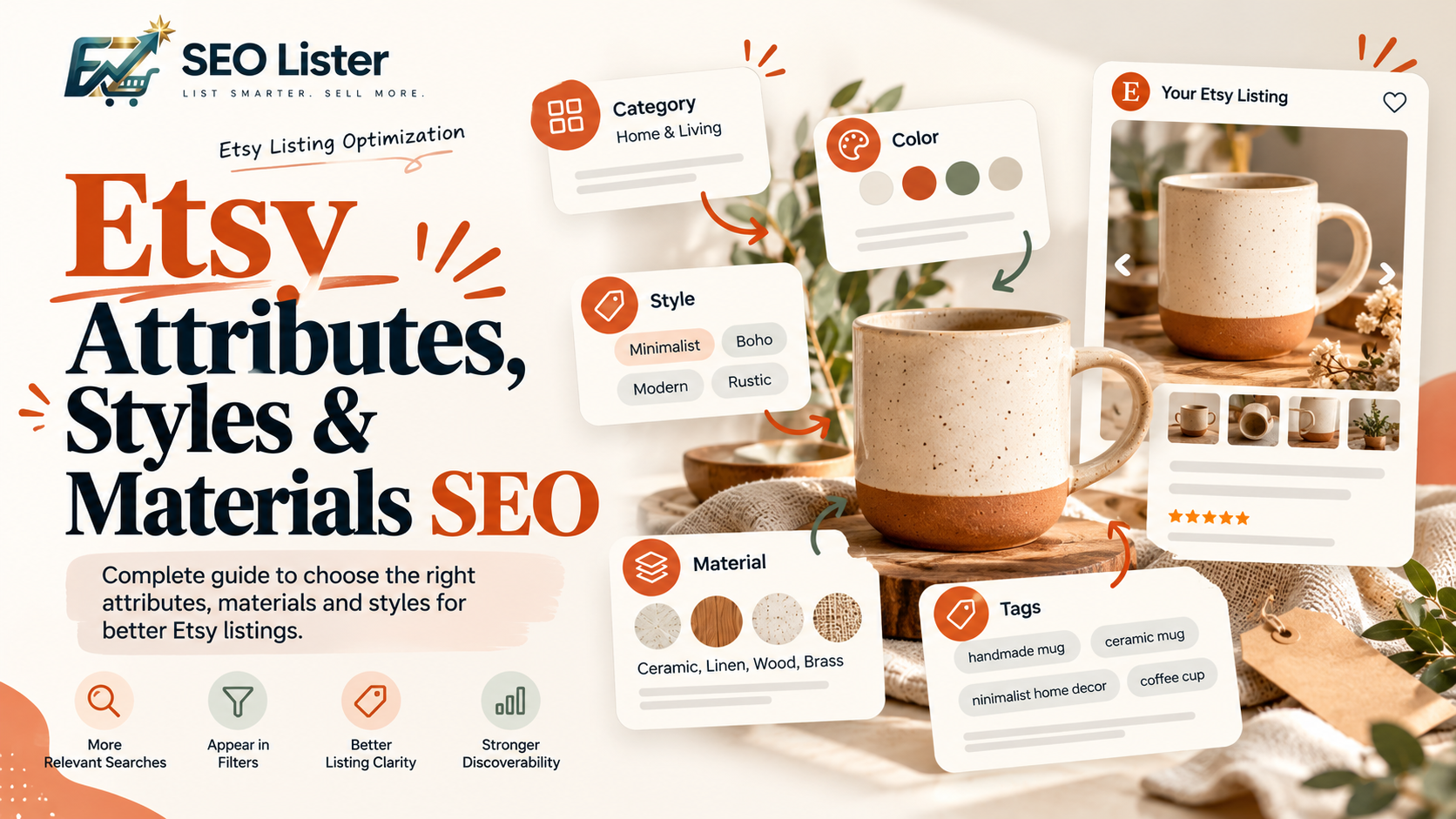
Quick answer: Do Etsy attributes help SEO?
Yes. Etsy attributes can help your listing match relevant searches and appear in category-specific filtered results. They describe structured product characteristics such as color, material, occasion, size, or other details available for a particular category.
For effective Etsy listing optimization:
- Choose the most specific accurate category
- Complete every relevant attribute offered for that category
- Select materials that genuinely describe your product
- Use style options when they accurately represent the item and are available
- Use tags and descriptions to cover useful details that structured fields cannot express
- Avoid irrelevant attributes or unsupported material claims
Attributes create opportunities for relevant matching. They do not guarantee rankings, impressions, clicks, or sales.
After you update attributes, run the free Etsy listing analyzer to spot other gaps in title, tags, and description.
What are Etsy listing attributes?
Etsy listing attributes are structured details that describe specific characteristics of a product. They are selected from options in the listing editor rather than written entirely as free-form text.
Depending on the category, attributes may include:
- Primary or secondary color
- Material
- Occasion or holiday
- Size or dimensions
- Pattern or style
- Product-specific characteristics, such as gemstone or ring setting
Not every listing has the same options. Etsy determines which attributes are available based on the category and subcategory you select.
For example, an engagement ring may have attributes for gemstone and setting, while a vintage dress may offer material and style options.
Why attributes matter for Etsy search
Attributes serve two practical purposes.
Search matching: Attribute values can help Etsy understand which searches are relevant to your product.
Shopping filters: Buyers can narrow search results using category-specific filters. A listing needs the corresponding attribute to qualify for a filter based on that characteristic.
This is why completing relevant attributes is more useful than treating them as optional administrative details — a pattern we also call out in 10 Etsy SEO mistakes.
Read Etsy's official explanation in Add Attributes to Help Increase Your Shop's Visibility.
Etsy attributes vs tags vs materials vs styles
These terms are related, but they are not interchangeable.
| Listing field | What it describes | Example |
|---|---|---|
| Category | What the product is | Ceramic mug |
| Attribute | A structured characteristic | Blue, where available |
| Material | What the item is made from | Stoneware clay, where applicable |
| Style | The item's visual or design character, if offered | Minimalist, where available |
| Tag | A buyer-oriented search phrase | Handmade ceramic mug |
| Title | The product and its important traits | Blue Stoneware Coffee Mug |
| Description | Detailed product information | Dimensions, care, finish |
The important distinction is that attributes and categories use structured options, while tags allow you to express relevant search phrases in your own words.
Etsy says categories and attributes can act like tags for search matching. Therefore, you do not need to waste a tag on an exact phrase already covered by a category or attribute. Use that tag for a more descriptive phrase instead.
For example, if the accurate material attribute already identifies faux fur, a tag such as faux fur accent rug may provide more context than using faux fur alone.
See Etsy's Keywords 101 guide and our Etsy Tags Guide for how these fields work together.
How to choose the right Etsy attributes
The best starting point is the product itself, not a list of keywords.
Step 1: Select the most specific accurate category
Choose the category that most closely describes what you are selling.
A specific category can provide access to more relevant attributes. It can also help Etsy understand the listing's place in its marketplace taxonomy.
Do not select a category because you believe it has less competition or attracts more traffic. Select it because it accurately describes the item.
Step 2: Review every available attribute
After selecting a category, inspect the attributes shown in the listing editor.
Check each available option and ask:
- Does this accurately describe my product?
- Is this detail relevant to a buyer deciding what to purchase?
- Would this option help distinguish my item from similar products?
- Can I support the selection with the actual product details?
Complete the relevant fields and skip those that do not apply.
Step 3: Choose the closest accurate option when necessary
Sometimes the exact term you use for a product is not available as an attribute.
Etsy gives the example of a lemon-colored scarf when “lemon” is not an available color option. The seller can select the closest accurate option, such as yellow, and use a relevant tag such as lemon scarf to express the more specific wording.
This approach keeps the structured information accurate while preserving useful descriptive language.
Step 4: Check for new or changed options
Etsy may update its categories and attributes. A field that was unavailable previously may become available later.
When auditing older listings, review the live listing editor rather than assuming its available attributes have remained unchanged. Pair that with the Etsy SEO checklist before you publish.
Etsy materials SEO: Describe what the product is made from
Material information can help shoppers understand a product's composition and suitability.
However, material selection must reflect the actual item, not the keyword you want to target.
Consider a handmade tote bag.
Its relevant material information might include cotton canvas, a metal zipper, and cotton lining. The exact details depend on how the bag is made and which structured options Etsy offers.
Choose materials based on the whole item
Etsy's Help Center explains that a material selection should describe the item's composition as a whole rather than just a separate component, subject to its specific guidance for small functional components.
If a material field does not fully capture the product's composition, provide the necessary details in the description.
For example:
- Material field: Choose the applicable available material
- Description: Explain fabric composition, lining, hardware, finish, or other relevant components — draft structure with the Etsy description generator
- Tags: Use relevant buyer phrases that add useful context
Do not describe a product as solid gold if it is gold-plated. Do not select organic or recycled materials unless the claim meets Etsy's requirements and you have adequate supporting information.
Be careful with sustainability claims
Terms such as organic, recycled, plastic-free, upcycled, and vegan can have specific meanings in Etsy's guidance.
They are not interchangeable marketing adjectives.
For example, Etsy's Help Center explains that recycled-material claims must be supported by the product's actual material composition. Simply reusing an existing object does not automatically mean the material qualifies as recycled; upcycled may be the more appropriate designation when the item has been meaningfully transformed.
Review the official Etsy materials and attributes guidance before making claims about your products.
Etsy styles: Choose style attributes accurately
Style can help shoppers understand the visual character of an item. However, style options vary by category, and a separate style attribute may not be available for every product.
Think about what a buyer can actually observe.
For example, a home decor product might have a minimalist appearance, while a piece of jewelry might have a vintage-inspired design.
If Etsy offers an appropriate style attribute, select the option that genuinely fits the item.
If the exact style is unavailable, explain it naturally in your title, tags, description, and photographs.
Example: A minimalist ceramic vase
Suppose you sell a handmade white ceramic vase with a simple shape.
A useful listing setup might look like this:
- Category: The most specific accurate vase category available
- Color: White, if accurate and offered
- Material: The correct ceramic material option, if offered
- Style: A relevant minimalist option, if offered
- Tags: Handmade ceramic vase, minimalist home decor, white flower vase
- Description: Dimensions, finish, construction, care, and intended use
These are illustrative examples, not guaranteed Etsy field options. Your actual choices depend on the category and the current listing editor.
The lesson is simple: use structured fields for the details they support, then use descriptive text for the nuances that remain.
Creating a listing from scratch? Use the listing generator from photos or from text, then verify every style and material before publishing — see How to create a new Etsy listing.
How to use Etsy attributes and tags together
One of the most common mistakes in Etsy listing optimization is repeating the same phrase across every field.
Your title, tags, attributes, and description should work together rather than compete to say the same thing.
Imagine you sell a handmade linen cushion cover.
An illustrative keyword map could look like this:
| Field | Example | Purpose |
|---|---|---|
| Category | Most specific cushion-cover category | Defines product type |
| Material | Linen, if accurate and offered | Describes composition |
| Color | Beige, if accurate and offered | Identifies a visual trait |
| Title | Beige Linen Cushion Cover | Communicates product and traits |
| Tags | Neutral sofa decor; textured cushion cover | Adds relevant search language |
| Description | Dimensions, closure, care and fabric details | Answers buyer questions |
Do not copy this example blindly. Adapt every field to your actual item and the options Etsy provides.
A practical tag-selection rule
After completing your attributes, review your tags.
Ask whether each tag contributes a distinct, relevant search concept. If a tag merely repeats a category or attribute verbatim, consider using that space for a more descriptive phrase.
For example, neutral sofa decor may add more context than repeating beige when beige is already covered by an attribute.
Keep tags relevant. A phrase should never be added simply because it sounds popular if it misrepresents the item.
For titles that front-load materials and style without stuffing, read How to Write Etsy Titles That Get Found.
Five Etsy attribute mistakes to avoid
Mistake 1: Leaving relevant attributes blank
Fix: Review every attribute available for your product category and complete those that accurately apply.
Mistake 2: Selecting irrelevant attributes
Fix: Describe what the item actually is, not every occasion or use for which someone might buy it.
A wallet that would make a good Father's Day gift is not necessarily a Father's Day item. Etsy specifically warns against using holiday attributes merely because an item could be given as a gift for that occasion.
Mistake 3: Choosing an inaccurate material
Fix: Verify the actual composition before selecting a material. Add further composition details to the description when needed.
Mistake 4: Using the wrong category
Fix: Start with the most specific accurate category. Review the available attributes again if you change the category.
Mistake 5: Repeating attributes in tags without adding context
Fix: Use tags to describe useful combinations, product applications, or other relevant phrases not already expressed by your structured fields.
These fixes improve listing completeness and clarity. They do not guarantee a particular search position. For more field-level errors, see Etsy SEO mistakes.
Etsy attributes SEO checklist
Use this checklist when creating a new listing or reviewing an existing one.
- The category accurately describes the product
- The most specific appropriate subcategory is selected
- Every relevant available attribute is completed
- Colors and dimensions are accurate
- Materials describe the actual product composition
- Sustainability-related claims are supported
- Style selections reflect the item's actual design, where available
- The title communicates the product clearly
- Tags cover relevant search phrases without unnecessary repetition
- The description explains important product details and buyer questions
- Photos support the claims made in the listing
- You have scored the listing and fixed remaining gaps
Repeat this process when adding new products or auditing listings that need attention. Full shop-level gaps: Etsy shop analyzer.
How SEOLister helps with attributes, styles, and materials
SEOLister helps sellers prepare Etsy listing content from product photos or a product brief — including titles, tags, descriptions, styles, and materials.
Instead of treating listing optimization as a keyword-only task, use the workflow to review the product details, check the suggested fields, and confirm that each selection matches the item you actually sell.
Its completion score can help you identify missing listing information. It is a tool-level checklist, not Etsy's own search visibility score or a guarantee of ranking.
Review the generated suggestions before publishing, particularly for exact materials, sizes, sustainability claims, and category-specific attributes.
Start free, no account required for many tools:
- Etsy listing analyzer — score title, tags, and completeness gaps
- Listing generator from image — draft styles and materials from photos
- Listing generator from text — draft from a product brief
- Etsy tag generator — fill tags that complement attributes
- Etsy description generator — expand material and care details
- All free Etsy tools
Compare workflows in Best Etsy SEO tools, or explore SEOLister features and pricing.
Frequently asked questions
Do Etsy attributes help SEO?
Yes. Etsy says attributes can help listings match relevant search queries and appear in category-specific filtered results. Their usefulness depends on selecting accurate options that apply to the product.
Are Etsy attributes more important than tags?
They serve different purposes and work together. Attributes provide structured, category-specific information, while tags let you add relevant search phrases in your own words. Use both accurately rather than treating one as a substitute for the other.
Should I repeat my Etsy attributes in my tags?
You do not need to use a separate tag for an exact phrase already covered by a category or attribute. Consider using that tag for a relevant descriptive phrase that adds context, provided it accurately describes your product.
How do I add attributes to an Etsy listing?
Open Shop Manager, select Listings, and create or edit a listing. Choose the appropriate category, find the Attributes section under the listing options, and select the values that accurately describe the item. The available fields depend on the category; consult Etsy Help for current instructions.
What materials should I select for my Etsy product?
Choose materials that accurately describe the product's composition and meet Etsy's definitions for the selected option. If the product includes multiple components, explain the relevant composition in the description as needed. Do not make unsupported organic, recycled, or other material claims.
What if my Etsy listing does not offer the style or material I need?
Choose the closest accurate structured option when appropriate, then explain the more specific detail in your tags or description. Do not select an inaccurate attribute just to include a preferred keyword. Check the current listing editor because available options can vary by category and change over time.
Can filling out all Etsy attributes guarantee better rankings?
No. Completing relevant attributes can create more opportunities for matching relevant searches and filters, but it does not guarantee impressions, rankings, clicks, or sales. Etsy search considers multiple listing and shop signals.
Conclusion: Optimize the fields, not just the keywords
Etsy attributes, styles, and materials are not minor details to fill in after writing a title. They help explain what your product is, provide structured information, and can support relevant search matching.
Start with the correct category. Complete the attributes that genuinely apply. Verify materials and any special claims. Then use your title, tags, description, and photographs to add the information that structured fields cannot express.
A complete, accurate listing gives shoppers clearer information and helps Etsy interpret the product more effectively. That is a more sustainable approach than repeating keywords or selecting irrelevant options in pursuit of visibility.
Next steps: Analyze a listing · Create from photos · Browse free tools
Frequently asked questions
Do Etsy attributes help SEO?
Yes. Etsy says attributes can help listings match relevant search queries and appear in category-specific filtered results. Their usefulness depends on selecting accurate options that apply to the product.
Are Etsy attributes more important than tags?
They serve different purposes and work together. Attributes provide structured, category-specific information, while tags let you add relevant search phrases in your own words. Use both accurately rather than treating one as a substitute for the other.
Should I repeat my Etsy attributes in my tags?
You do not need to use a separate tag for an exact phrase already covered by a category or attribute. Consider using that tag for a relevant descriptive phrase that adds context, provided it accurately describes your product.
How do I add attributes to an Etsy listing?
Open Shop Manager, select Listings, and create or edit a listing. Choose the appropriate category, find the Attributes section under the listing options, and select the values that accurately describe the item. The available fields depend on the category.
What materials should I select for my Etsy product?
Choose materials that accurately describe the product's composition and meet Etsy's definitions for the selected option. If the product includes multiple components, explain the relevant composition in the description as needed. Do not make unsupported organic, recycled, or other material claims.
What if my Etsy listing does not offer the style or material I need?
Choose the closest accurate structured option when appropriate, then explain the more specific detail in your tags or description. Do not select an inaccurate attribute just to include a preferred keyword.
Can filling out all Etsy attributes guarantee better rankings?
No. Completing relevant attributes can create more opportunities for matching relevant searches and filters, but it does not guarantee impressions, rankings, clicks, or sales.
Related articles
Etsy SEO
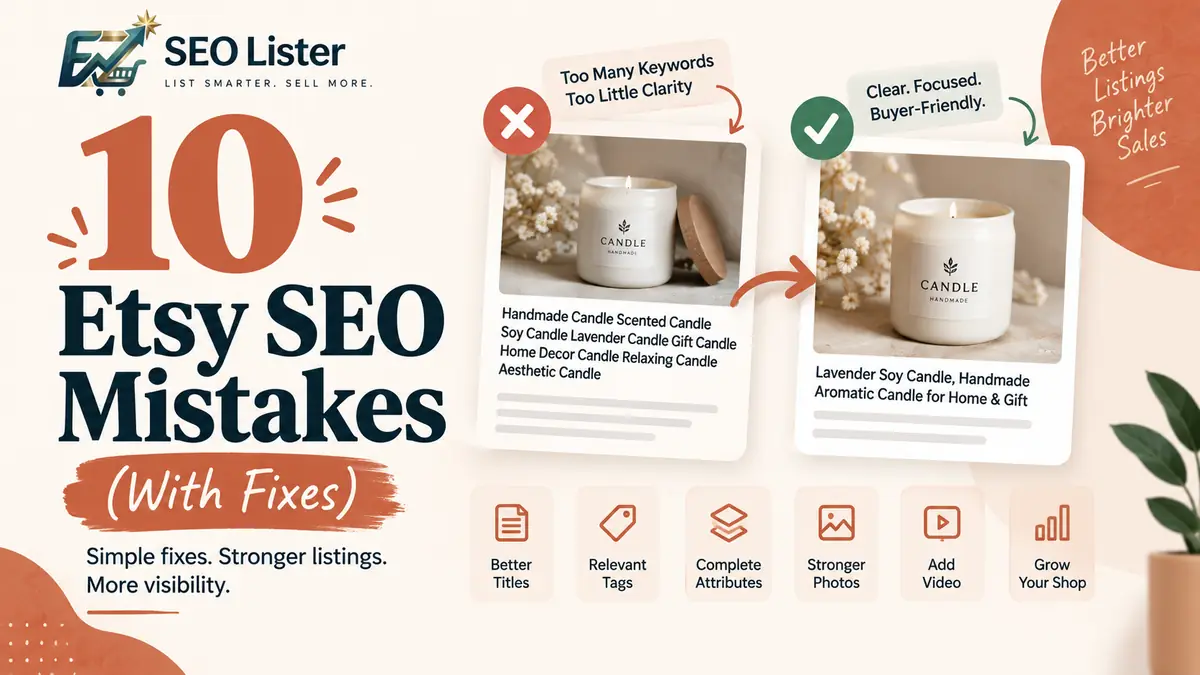
10 Etsy SEO Mistakes That Quietly Kill Visibility
Find common Etsy SEO mistakes, from weak titles and repetitive tags to missing attributes and thin photos. Learn practical fixes for listing visibility.
Etsy SEO
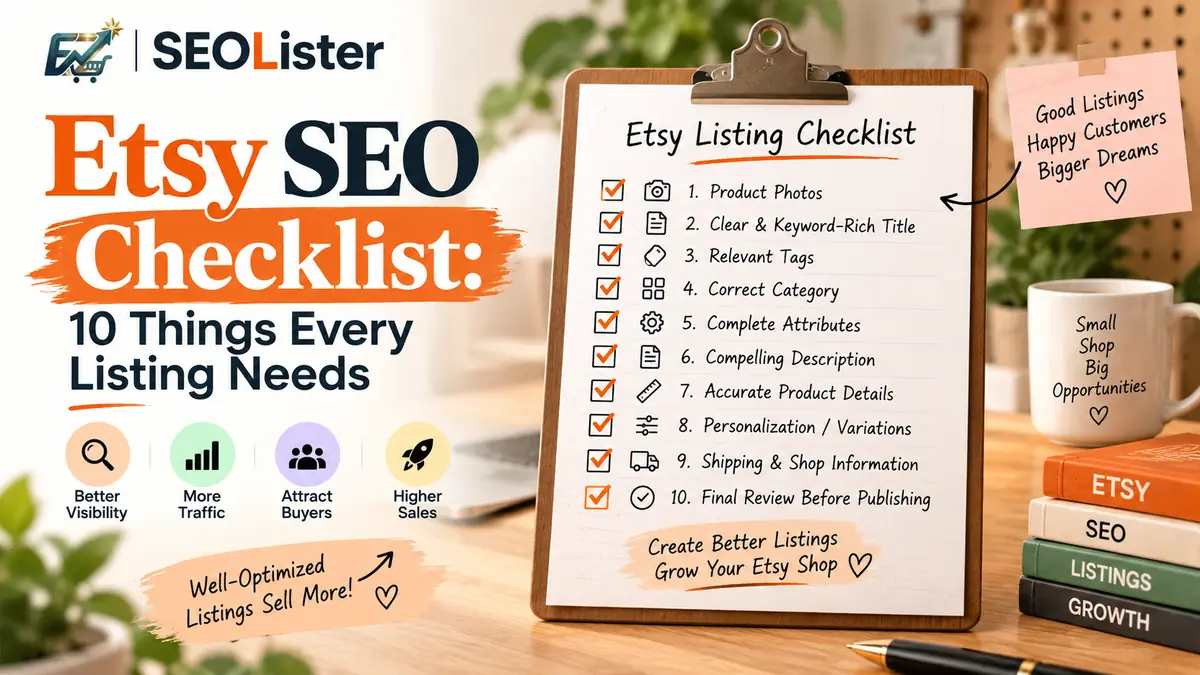
Etsy SEO Checklist: 10 Things Every Listing Needs
Shipping incomplete listings? Run this checklist to close gaps in titles, tags, attributes, and photos before products stay invisible in search.
Etsy SEO
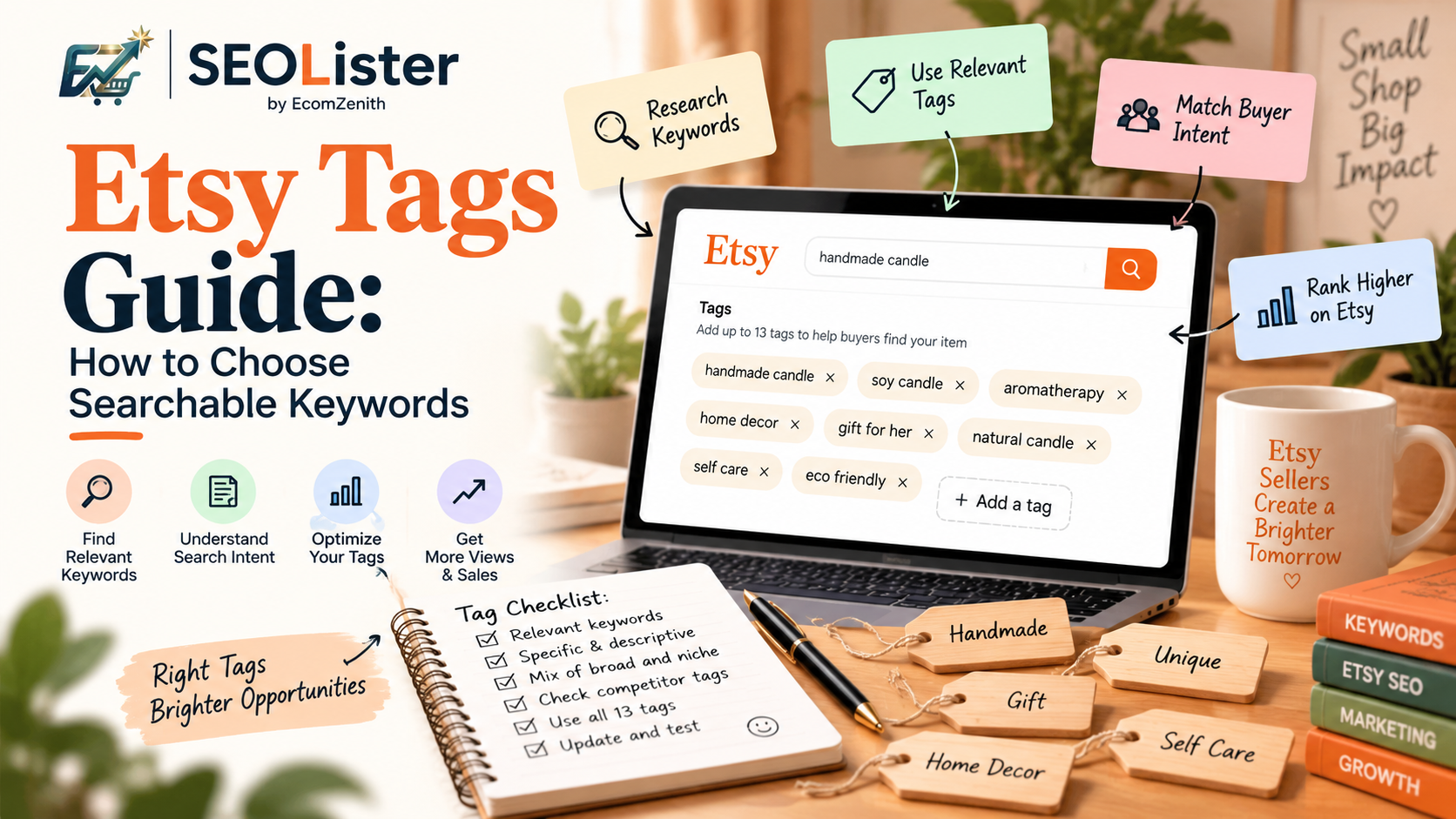
Etsy Tags Guide: How to Choose Searchable Keywords
Learn how to choose all 13 Etsy tags using specific, buyer-focused search phrases that can help your listings match relevant Etsy searches.